


News Center
Recommending Products
Contact: Mr. Jin
Tel: 13901575780
0512-52428686
Contact: Mr. Zha
Tel: 13913639797
0512-52422071
Address: No. 59, Huyi Road, Liantang, Shanghu Town, Changshu City, Jiangsu Province.
What are the applications of high-speed steel single angle milling cutters in the mold manufacturing
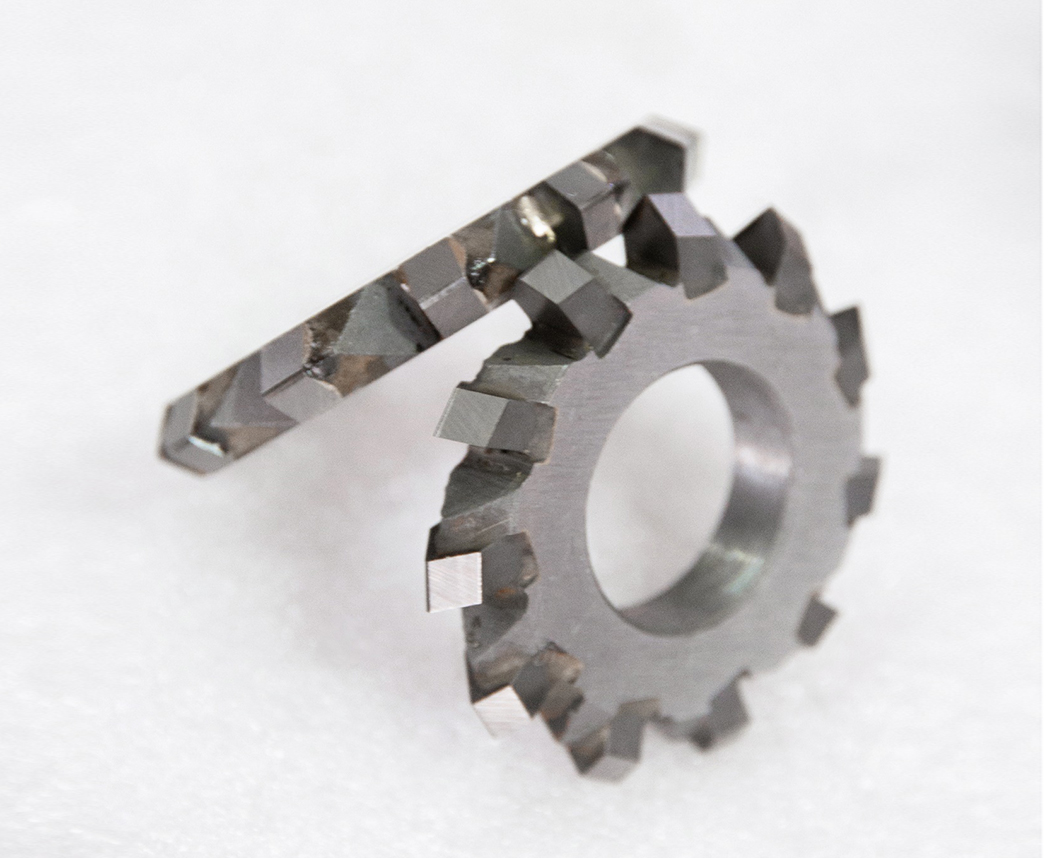
High speed steel single angle milling cutter, with a cutting edge with a single-sided conical angle, is divided into symmetrical and asymmetrical single angle milling cutters. Made of high-speed steel (HSS), it has good toughness and impact resistance, suitable for semi precision and precision machining of mold steel. It focuses on processing various inclined slots, chamfers, retreat slots, and mold cavity oblique characteristics, and is mostly used for milling of cold stamping dies, plastic molds, die-casting molds, and fixture fixtures.Sources:www.cssjlgj.com | PublishDate:2026.08.10
1、 Main processing scenarios
1. Processing of oblique grooves and dovetail grooves in molds
Swallowtail groove/dovetail guide rail: dovetail guide groove on stamping die frame, die slider, core pulling slider, and fixture. The angle of the single angle milling cutter matches the dovetail angle, directly milling the inclined surface of the groove to ensure the clearance of the slider fit, and is the machining tool for the guiding part of the mold slider.
Slope positioning groove: mold positioning keyway, oblique locking groove, used for positioning and locking of inserts and pressure blocks, milling inclined surfaces to ensure assembly fit.
2. Mold cutting edge, die retreat groove, and clearance groove
Cutting die cutting edge retreat groove: milling angle retreat groove at the root of the cold stamping die convex and concave die cutting edge to avoid interference of the grinding wheel during grinding and prevent stress concentration and cracking of the cutting edge; A single angle milling cutter is used to produce a sloping retreat, leaving room for subsequent grinding processes.
Insert clearance groove: The oblique clearance groove at the position of the mold insert and parting surface removes excess material and reduces the grinding area of the mating surface.
3. Chamfering, chamfering, and corner cleaning processing
Chamfering of mold frame and template holes: Chamfering the C-angle and oblique angle of template screw holes, pin holes, and guide column holes to remove burrs and facilitate the assembly of guide column pins.
Cleaning of local oblique angles in mold cavities: cleaning of small angle slopes and corners inside plastic and die-casting mold cavities; For narrow corners where the equipment cannot directly cut, high-speed steel single angle milling cutters rely on the cutting edge angle to perform local corner cleaning and remove the remaining fillet allowance of the end mill.
Attention: Only suitable for pre hardened steel and quenched and tempered steel with low hardness; After quenching, hard materials are generally replaced with hard alloy cutting tools.
4. Processing of various pressing blocks, locking blocks, and wedge blocks
The wedge block (oblique wedge), pressure block, and locking block of the mold rely on the inclined surface to achieve mold locking and lateral pressure. A single angle milling cutter is used to directly mill the inclined surface of the wedge block and process the mating surface of the inclined surface, which is used for lateral force locking of stamping dies and wedge locking mechanism of die-casting die sliders.
5. Processing of tooling fixtures and mold accessories
Processing of inclined and skewed surfaces for mold matching fixtures, positioning fixtures, pressure plates, and blocking blocks; Processing spring installation slots, retaining ring slots, and other irregular slots.
2、 Adapt mold materials and process characteristics
Applicable materials: Mainly used for processing quenched and tempered mold steel, pre hardened steel (45 #, 40Cr, P20, 718H), not suitable for quenched hard materials above HRC45, high-speed steel is prone to rapid wear and burning.
Process: Mainly semi precision machining, precision machining, corner cleaning, and deburring, without excessive rough cutting; Good cutting toughness, intermittent cutting is less prone to chipping, and compared to hard alloy cutting tools, it is more impact resistant.
Limitations: Not suitable for high hardness quenched steel, high-speed steel has limited red hardness, and is prone to annealing wear at high speeds.
3、 Key points of typical model selection in mold industry
Angle: Select according to the inclined plane and dovetail groove angle on the drawing (45 °, 60 °, 75 °, and 90 ° are the most commonly used);
Tooth profile: Fine teeth are suitable for precision machining, while coarse teeth are suitable for semi precision machining with slightly larger margins;
Usage differentiation: Asymmetric single angle milling cutters are mostly used for single-sided inclined grooves and return grooves; Symmetric single angle milling cutters are commonly used for dovetail grooves.